
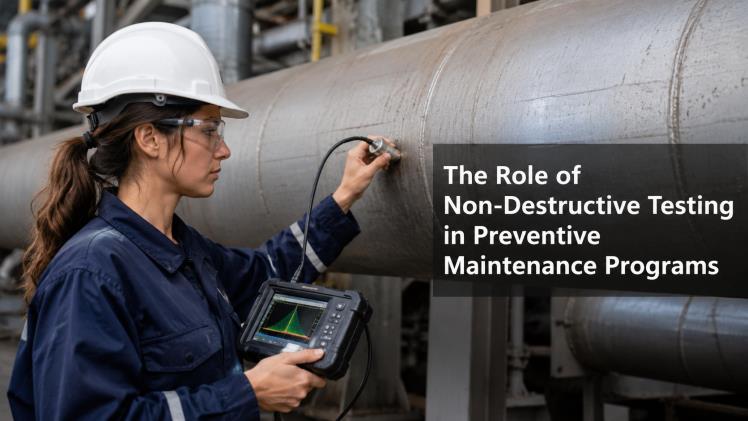
Preventive maintenance plays a vital role in helping organizations reduce equipment failures, improve operational efficiency, and extend the lifespan of valuable assets. Rather than waiting for machinery or structures to fail, preventive maintenance focuses on identifying potential issues before they develop into serious problems. One of the most effective tools supporting this approach is non-destructive testing, commonly known as NDT.
Non-destructive testing allows technicians to evaluate the condition of materials, components, and systems without causing any damage. By providing accurate insights into hidden defects and wear, NDT has become an essential part of modern preventive maintenance programs across a wide range of industries.
Understanding Non-Destructive Testing
Non-destructive testing refers to a collection of inspection methods used to assess the integrity of materials and equipment while keeping them fully operational. Unlike destructive testing, which may require cutting, breaking, or altering a component, NDT techniques preserve the item’s usability throughout the inspection process.
Common methods include ultrasonic testing, magnetic particle testing, radiographic testing, visual inspections, and liquid penetrant testing. These techniques help identify cracks, corrosion, voids, thickness loss, and other defects that may compromise performance or safety.
Because these methods can reveal hidden issues without interrupting operations for extended periods, they are widely used in manufacturing, construction, energy, transportation, and many other sectors.
Supporting Early Detection of Problems
One of the primary benefits of incorporating NDT into preventive maintenance programs is the ability to detect problems early. Equipment often develops small defects long before a failure occurs. If these defects remain unnoticed, they can grow over time and lead to costly repairs or unexpected downtime.
Through regular NDT inspections, maintenance teams can identify these warning signs before they become critical. Early detection allows organizations to schedule repairs during planned maintenance windows rather than dealing with emergency breakdowns.
This proactive approach reduces operational disruptions and helps maintain productivity across facilities and job sites.
Extending Equipment Lifespan
Industrial equipment and infrastructure represent significant investments. Companies naturally want to maximize the value of these assets for as long as possible.
Non-destructive testing contributes to longer equipment life by providing valuable information about asset condition. Maintenance teams can monitor wear patterns, track material degradation, and evaluate structural integrity over time.
With accurate data available, maintenance decisions become more strategic. Components can be repaired, reinforced, or replaced only when necessary, preventing unnecessary expenditures while protecting long-term asset performance.
As a result, organizations often achieve greater returns on their equipment investments.
Improving Workplace Safety
Safety remains one of the most important priorities in any preventive maintenance strategy. Equipment failures can create hazardous situations for workers, customers, and the surrounding environment.
Non-destructive testing helps reduce these risks by identifying defects before they lead to accidents. Cracks in pressure vessels, corrosion in pipelines, or weaknesses in structural components can be discovered and addressed before they pose serious threats.
Regular inspections provide confidence that critical assets continue to meet safety requirements and operate as intended. This proactive approach helps create safer working environments while supporting regulatory compliance.
Reducing Maintenance Costs
Although preventive maintenance requires planning and investment, it is generally far more cost-effective than reactive maintenance. Emergency repairs often involve higher labor expenses, production losses, and replacement costs.
NDT supports cost reduction by providing precise information about equipment condition. Instead of replacing components based solely on age or estimated service life, organizations can make decisions based on actual inspection results.
This condition-based maintenance strategy allows resources to be allocated more efficiently. Maintenance budgets can focus on genuine concerns rather than unnecessary replacements, helping organizations optimize spending.
Strengthening Reliability and Performance
To stay productive and meet operational goals, you need tools that you can count on. Unexpected failures can disrupt schedules, delay projects, and impact customer satisfaction.
By integrating non-destructive testing into preventive maintenance programs, organizations gain a clearer understanding of asset health. Regular monitoring enables maintenance teams to address issues before they affect performance.
The result is improved reliability, fewer unexpected breakdowns, and greater confidence in equipment operation. Whether applied to manufacturing systems, transportation infrastructure, or industrial facilities, NDT plays a key role in maintaining consistent performance.
Conclusion
Preventive maintenance works best when it is backed up by correct and up-to-date information. That information is gathered through non-destructive testing, which finds hidden flaws and checks the state of assets without causing damage. NDT has become an important part of good maintenance plans because it helps find problems early, makes things safer, lowers maintenance costs, and makes things more reliable. Nondestructive testing will continue to be an important way to protect equipment and make sure operations run smoothly as long as businesses focus on efficiency and asset life.